|
|
|
|
|
|
|
|

|
Don't Miss Any Special Deals - Sign Up To Our Newsletter!
|
|||||||||||||||
| CLICK HERE FOR A FULL LIST OF ALL PHILIP WEST PRINTS BY TITLE |
|
|
No.331 Sqn RAF Founded : 21st July 1947
Norwegian For Norge - For Norway
|
No.331 Sqn RAF
No.331 Sqn RAF Artwork Collection |
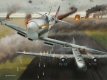  Mayhem at St Trond by Ivan Berryman. |
| Aircraft for : No.331 Sqn RAF | |||
| A list of all aircraft known to have been flown by No.331 Sqn RAF. A profile page including a list of all art prints for the aircraft is available by clicking the aircraft name. | |||
| Squadron | Info | ||

Manufacturer : Hawker Production Began : 1936 Number Built : 14533 | Hurricane Royal Air Force Fighter, the Hawker Hurricane had a top speed of 320mph, at 18,200 feet and 340mph at 17,500, ceiling of 34,200 and a range of 935 miles. The Hurricane was armed with eight fixed wing mounted .303 browning machine guns in the Mark I and twelve .303 browning's in the MKIIB in the Hurricane MKIIC it had four 20mm cannon. All time classic fighter the Hurricane was designed in 1933-1934, the first prototype flew in June 1936 and a contract for 600 for the Royal Air Force was placed. The first production model flew ion the 12th October 1937 and 111 squadron of the Royal Air Force received the first Hurricanes in January 1938. By the outbreak of World war two the Royal Air Force had 18 operational squadrons of Hurricanes. During the Battle of Britain a total of 1715 Hurricanes took part, (which was more than the rest of the aircraft of the Royal air force put together) and almost 75% of the Victories during the Battle of Britain went to hurricane pilots. The Hawker Hurricane was used in all theatres during World war two, and in many roles. in total 14,533 Hurricanes were built. | ||

Manufacturer : Supermarine Production Began : 1936 Retired : 1948 Number Built : 20351 | Spitfire Royal Air Force fighter aircraft, maximum speed for mark I Supermarine Spitfire, 362mph up to The Seafire 47 with a top speed of 452mph. maximum ceiling for Mk I 34,000feet up to 44,500 for the mark XIV. Maximum range for MK I 575 miles . up to 1475 miles for the Seafire 47. Armament for the various Marks of Spitfire. for MK I, and II . eight fixed .303 browning Machine guns, for MKs V-IX and XVI two 20mm Hispano cannons and four .303 browning machine guns. and on later Marks, six to eight Rockets under the wings or a maximum bomb load of 1,000 lbs. Designed by R J Mitchell, The proto type Spitfire first flew on the 5th March 1936. and entered service with the Royal Air Force in August 1938, with 19 squadron based and RAF Duxford. by the outbreak of World war two, there were twelve squadrons with a total of 187 spitfires, with another 83 in store. Between 1939 and 1945, a large variety of modifications and developments produced a variety of MK,s from I to XVI. The mark II came into service in late 1940, and in March 1941, the Mk,V came into service. To counter the Improvements in fighters of the Luftwaffe especially the FW190, the MK,XII was introduced with its Griffin engine. The Fleet Air Arm used the Mk,I and II and were named Seafires. By the end of production in 1948 a total of 20,351 spitfires had been made and 2408 Seafires. The most produced variant was the Spitfire Mark V, with a total of 6479 spitfires produced. The Royal Air Force kept Spitfires in front line use until April 1954. | ||
| Signatures for : No.331 Sqn RAF | |||
| A list of all signatures from our database who are associated with this squadron. A profile page is available by clicking their name. | |||
| Name | Info | ||
 Air Vice-Marshal David Scott-Malden Click the name or photo above to see prints signed by Air Vice-Marshal David Scott-Malden
| Air Vice-Marshal David Scott-Malden Born 26th December 1919, at Portslade, Sussex , David Scott-Malden became a Pilot Officer in October 1939. After training in the Cambridge University Air Squadron, Scott-Malden was selected for an Army Co-Operation course as a pilot officer. He was thrilled when in late May 1940 the chief instructor announced that he had a severe disappointment to communicate: Gentlemen, he said, you are to be transferred immediately to fighters. Scott-Malden joined No 603 (City of Edinburgh) Squadron at Hornchurch, Essex in early October 1940 as a replacement Spitfire pilot during the early stage of the Battle of Britain over the South-East. The squadron had been much depleted by losses that summer as was only too apparent in an action over Kent on October 12th. Eight aircraft were directed into a large gaggle of Me109 fighters, we split up individually and passed head-on through the enemy formation. There was a sense of shock as a distant series of silhouettes suddenly became rough metal with grey-green paint and yellow noses, passing head-on on either side. At the far end I had a few minutes dog fight with the last 109, scoring hits leaving a trail of black smoke. Then we were alone at 20,000 feet, the German gliding down with an engine which coughed and barely turned over, I with very little ammunition and very little petrol. He glided towards the Channel. I looked for an airfield before my petrol ran out. Strangely, I felt inclined to wave to him as I left. But then I was only 20. It was Scott-Malden who would go onto many other victories with five confirmed and as many as seven probables. In June 1940 he was posted to fly Spitfires with No 611 (West Lancashire) Squadron at Digby, Lincolnshire before being transferred to No 603 (City of Edinburgh) Squadron at Hornchurch in early October. In the New Year of 1941 Scott-Malden flew offensive sweeps with 603 over northern France. He was promoted to flight commander and in September received command of No 54 Squadron. Bearing the initials S-M below the cockpit and the legend Bahrain, Scott-Maldens Spitfire W3632 - built at the Supermarine factory at Woolston, Hampshire - was a gift from the people of Bahrain, who had raised £15,000 to purchase the Spitfire. Moving in November to headquarters No 14 Group in Scotland, Scott-Malden had the task of helping to bring to operational readiness the first Free Norwegian fighter squadrons, with pilots who had escaped from Norway. When they were ready Scott-Malden was appointed, in March 1942, to command the Norwegian Fighter Wing of three squadrons at North Weald in Essex. In the summer, the wing built a magnificent reputation and covered itself in glory during the disastrous Dieppe raid of August 20. Operating from the Kent coastal airfield at Manston, Scott-Malden led Nos 242, 331 and 332 squadrons in three separate sorties on the day, seeking, against great odds, to protect the mostly Canadian troops as they attempted to land and then to withdraw. Scott-Malden was awarded a DSO in 1942 and was also decorated by King Haakon of Norway with the Norwegian War Cross, lunching with the King afterwards at Claridges. In New Year 1944, in preparation During the run for the Normandy invasion, in 1944 Scott Malden joined a mobile group control unit on Goodwood racecourse. After D-Day June 6, the unit moved to Normandy with the roll to control fighter support. During the summer of 1944 Scott-Malden was promoted acting group captain and given command of No 125, a Spitfire wing covering the Allied forces as they advanced through North-West Europe from nine different points. Scott-Malden took a permanent commission witht he RAF and took a number staff and command appointments, one of which was to assist with plans for the Suez campaign of 1956. Scott-Malden final tally of victories stood at 3 confirmed destroyed with two shared, five probables and 12 damaged with another one sharedbecame an Air Vice marshal in 1965. and left the RAF in 1966 taking a administrator position with the Ministry of Transport and in 1978 retiring to Norfolk . Sadly, he died on 1st March 2000. Citation for the award of the Distinguished Flying Cross. Citation for the award of the Bar to the Distinguished Flying Cross. Citation for the award of the Distinguished Service Order. | ||
|
Contact Details |
|
Sign Up To Our Newsletter!
This website is owned by Cranston Fine Arts. Torwood House, Torwoodhill Road, Rhu, Helensburgh, Scotland, G848LE Contact: Tel: (+44) (0) 1436 820269. Email: cranstonorders -at- outlook.com |
 |


